The Internet Is Being Re-Intermediated. Adobe's Data Shows How Fast.
AI traffic to retail grew 393% in Q1. AI-referred shoppers now convert 42% better than search. The 25-year path from search box to purchase is being permanently rerouted.

- ● AI traffic to U.S. retail sites grew 393% YoY in Q1 2026, with similar surges across travel (233%), financial services (158%), and media (84%).
- ● AI-referred shoppers now convert 42% better than traditional channels — a complete reversal from March 2025 when they converted 38% worse.
- ● The average retail product page scores just 66% on AI readability, meaning one-third of product content is invisible to LLMs.
- ● Google faces an existential threat to its $200B+ search advertising business as AI intermediaries capture the discovery layer that search has owned for 25 years.
For 25 years, the path from consumer intent to purchase has run through a search box. A query, a results page, a blue link, a product page, a cart. Google built a $200 billion annual advertising business on the assumption that this path would hold.
Adobe Digital Insights' Q1 2026 data, covering over 1 trillion visits to U.S. retail sites, documents the moment that path is being permanently rerouted.
The numbers are no longer debatable
AI-driven traffic to U.S. retail sites grew 393% year-over-year in Q1 2026. This follows a 693% YoY surge during the 2025 holiday season (November–December). The trajectory is not seasonal. It is structural.
The pattern extends across every industry Adobe measures:
- Retail: +393% YoY
- Travel: +233% YoY
- Financial services: +158% YoY
- Media & entertainment: +84% YoY
- Tech & software: +63% YoY
When every vertical shows triple-digit or near-triple-digit growth in AI-referred traffic simultaneously, the explanation is not that consumers discovered a new tool. The explanation is that consumers are changing how they find things.
The conversion flip changes the economics
The traffic growth alone would be a trend story. The conversion data makes it a structural shift.
In March 2025, AI-referred traffic to retail sites converted 38% worse than traditional channels — paid search, email marketing, direct visits. AI shoppers were browsing, not buying. Twelve months later, in March 2026, that same traffic converts 42% better. An 80-percentage-point swing in one year.
The behavioral data explains why. Once an AI-referred shopper lands on a retail site, they spend 48% longer on the page, browse 13% more pages per visit, and bounce 32% less than shoppers from traditional channels. AI-referred visits generate 37% higher revenue per visit.
The mechanism is straightforward: the LLM has already done the comparison shopping. By the time the consumer reaches the retailer's site, the consideration phase is over. They arrive with narrower intent and higher purchase confidence. Adobe's companion survey of 5,000+ U.S. consumers confirms this — 66% now say they trust AI tools to provide accurate product recommendations, up from negligible trust levels 18 months ago.
This is no longer a top-of-funnel curiosity channel. AI is becoming the highest-converting acquisition channel in retail.
One-third of product content is invisible to LLMs
Here is where Adobe's data shifts from trend report to strategic warning.
Adobe's AI Content Visibility Checker benchmarked U.S. retail sites on how much of their content is actually readable by LLMs. The results, scored out of 100%, reveal a readability hierarchy:
| Page type | AI readability score |
|---|---|
| Returns/exchanges | 82% |
| Contact us | 81% |
| FAQ | 80% |
| Customer service | 79% |
| Loyalty/membership | 78% |
| Homepage | 75% |
| Category pages | 74% |
| Store locator | 73% |
| Product pages | 66% |
The pattern is revealing. The pages retailers have historically optimized for human visitors — product pages with rich imagery, dynamic pricing, interactive configurators, JavaScript-rendered reviews — are the pages LLMs struggle to parse. One-third of product page content is invisible to machines.
The gap between the best-performing retailers (82.5% homepage score) and the worst (54.2%) is 52 percentage points. That gap determines which brands get surfaced when a consumer asks an LLM "what's the best running shoe under $150?" and which brands don't exist in the answer.
When AI traffic generates 37% more revenue per visit and is growing at 393% per year, the brands scoring 54% on readability are not just underperforming. They are disappearing from the fastest-growing discovery channel in commerce.
What re-intermediation means for product teams
The word Adobe uses is "re-intermediation" — the internet's discovery layer being restructured around a new intermediary. The last re-intermediation happened when Google displaced directories, portals, and bookmarks as the primary way consumers found things online. That took roughly a decade. This one is happening faster.
The implications for product teams are specific:
Your website is no longer your primary customer touchpoint. The LLM's representation of your website is. When a consumer asks ChatGPT or Perplexity for a product recommendation, the LLM doesn't send the consumer to your homepage. It reads your product pages, extracts what it can parse, synthesizes a recommendation, and either links to you or doesn't. If your product metadata is locked in JavaScript, rendered as images, or missing structured data, the LLM has nothing to work with. You don't appear in the answer.
Brand recognition matters less when the LLM decides what to recommend. In the search-box era, brand awareness drove clicks — consumers recognized your name in the results and chose you. In the LLM era, the model evaluates your content quality, product metadata completeness, and page structure. A lesser-known brand with better-structured product pages can outperform a household name with poor AI readability.
The discovery layer is moving off your property. When the LLM is the storefront, the comparison shopper, and the recommendation engine, the consumer's decision is being made before they reach your site. Product teams accustomed to optimizing on-site conversion funnels now need to optimize for off-site representation — how your product appears in the LLM's synthesis, not just how it appears on your own pages.
What does Google do?
This is the question Adobe's report raises but doesn't answer, and it may be the most consequential strategic question in technology right now.
Google's search advertising business generated over $200 billion in revenue in 2025. That business depends on one assumption: that the path from consumer intent to action runs through Google's search results page, where ads are placed. Every AI-referred visit that bypasses Google's results page is a visit Google cannot monetize.
Google is not standing still. Its AI Overviews — the AI-generated summaries that appear above traditional search results — are Google's attempt to keep the discovery layer on its own property. But AI Overviews create a paradox: the more useful the AI summary, the less reason the consumer has to click through to a retailer's site. Google is cannibalizing its own click-through business to prevent someone else from cannibalizing it first.
The more aggressive scenario is that Google begins gating AI-referred traffic through its own commercial layer — requiring retailers to pay for visibility within AI Overviews the same way they pay for visibility in search ads. This would effectively create an AI advertising market where brands bid for LLM recommendation placement. Google has the infrastructure, the advertiser relationships, and the regulatory cover to build this. Whether they will — and how fast — depends on how quickly AI traffic erodes the traditional search ad business.
The alternative scenario is more disruptive: Google loses the discovery layer entirely. If consumers develop the habit of going directly to ChatGPT, Claude, or Perplexity for product recommendations — bypassing Google altogether — then Google's position in commerce becomes analogous to Yahoo's position in 2008. Still large, still profitable, but structurally declining as the interface layer shifts to a new platform.
Adobe's data suggests the second scenario is further along than most analysts assume. The 393% traffic growth is not going to Google. It is going around Google.
The Super Bowl signal
One data point from Adobe's report deserves specific attention. During the 2026 Super Bowl, AI-referred traffic to retail sites spiked 425% year-over-year and 162% above a normal Sunday.
This means consumers are now responding to cultural moments — a Super Bowl ad, a celebrity endorsement, a trending product — by asking an LLM rather than typing a search query. The impulse that used to produce a Google search now produces an AI conversation. That behavioral shift, once embedded in cultural habits, does not reverse.
The gap that determines what comes next
Adobe's survey found 61% of U.S. consumers are aware of AI shopping tools. But only 30% use them regularly. The 31-point gap between awareness and regular usage is the adoption wave that hasn't fully arrived yet.
When it does — and the trajectory says it will, with Gen Z at 53% AI shopping adoption and Millennials at 48% — the brands that score 66% on product page readability will face a choice they should be making now: restructure their digital properties for machine readability, or accept that the fastest-growing, highest-converting channel in commerce will route around them.
The search box isn't dead. But its 25-year monopoly on how consumers find products is over. The re-intermediation is not approaching. It's here.
This is one of the shifts I'm tracking closely in my ongoing research into AI value in enterprise deployments. Adobe's data quantifies the demand side — consumers are moving. The supply side — whether enterprises restructure their digital properties fast enough to remain visible — is the open question. Every signal I'm finding points in the same direction: the organizations that treat AI readability as a product problem, not a marketing afterthought, will be the ones that survive the transition. The rest are still looking for the signal. The signal arrived.
Sources:
- Adobe Digital Insights: Q1 2026 AI Traffic Report
- Adobe AI Content Visibility Checker
- Alphabet 2025 Annual Report (10-K)
How helpful was this article?
Share this article
Latest Episodes ›
All episodes

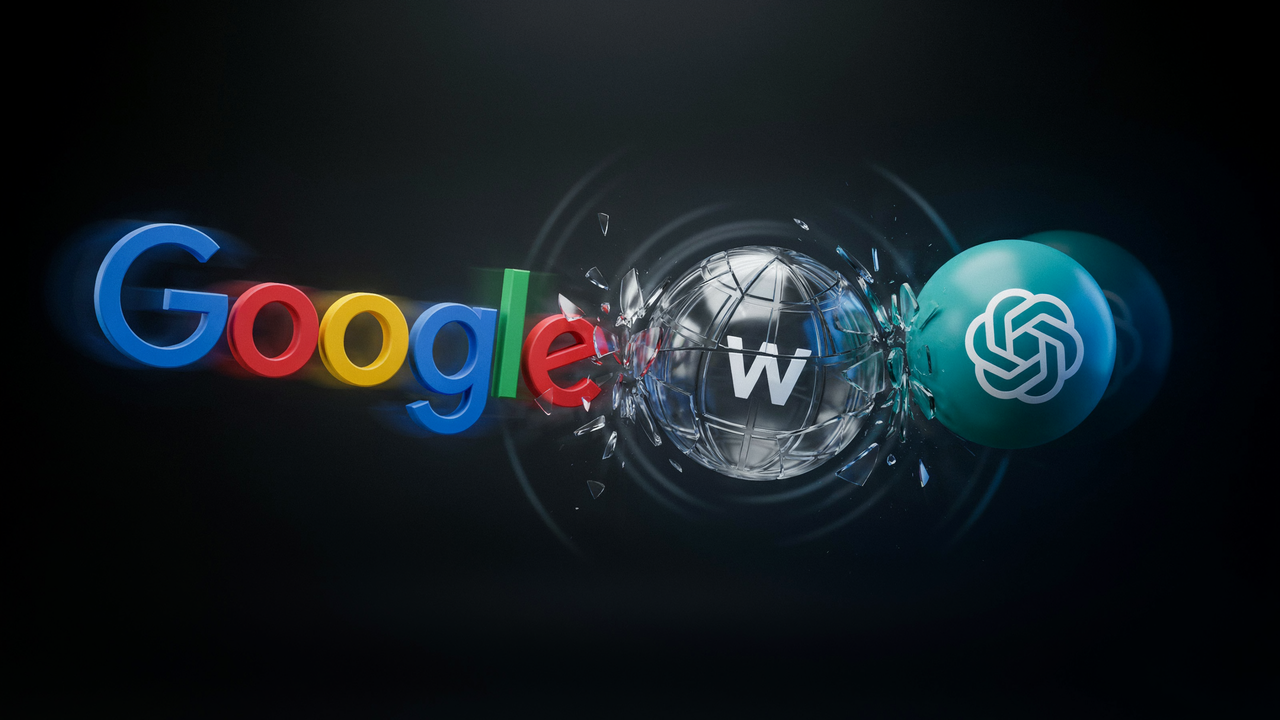
Google and LLMs Are Destroying Your Website & Traffic

Why AI Hasn't Found Its Killer Use Case

How Apple's WWDC 2026 Siri Announcements Change How We Build for iOS

The UX Researcher's Guide to Claude, Claude Cowork, and Claude Code
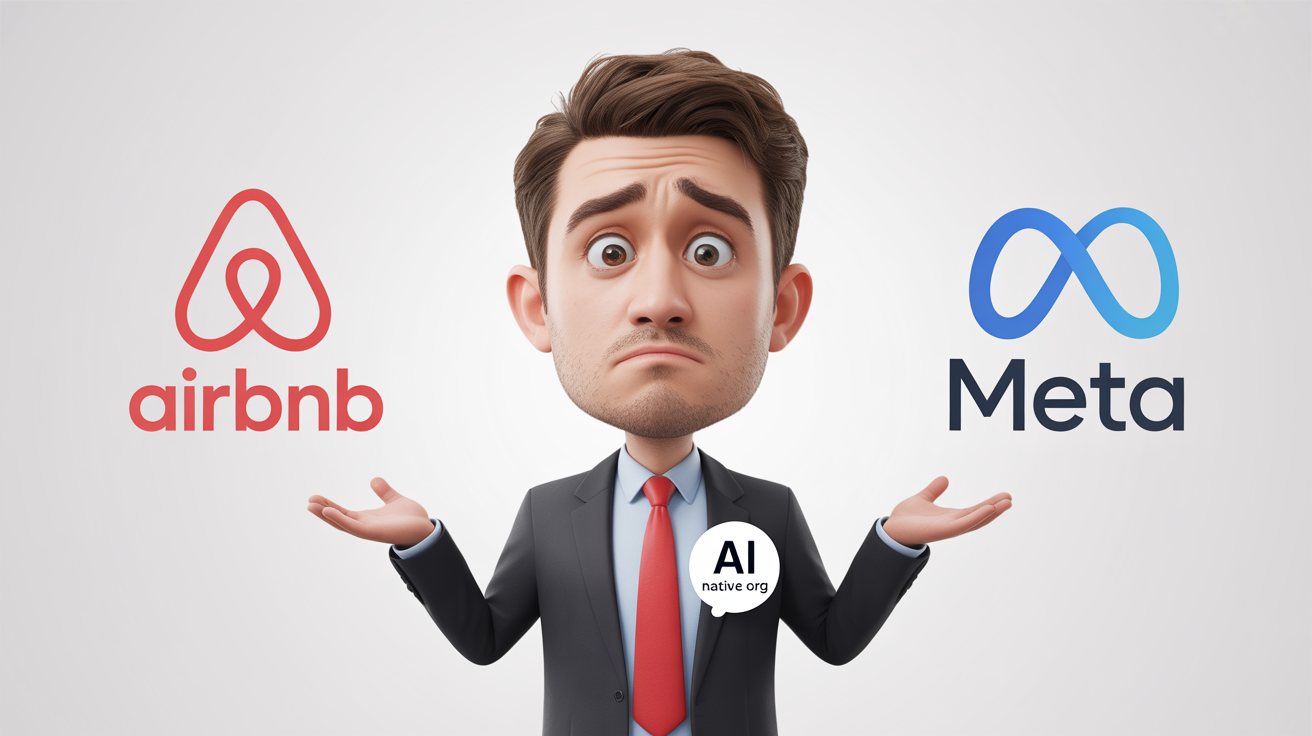
WTF is an AI-native org anyways? Let's compare Airbnb & Meta's opposing plans.

Future of UX Research: Guide for How UX Researchers Can Protect Their Jobs & Careers
Product Impact Newsletter
AI product strategy delivered weekly. Free.