"Human in the Loop" Needs to Die
The phrase leaves people accountable for work they never saw and quietly turns your customers into the quality-control team. What to build instead, for your product and for your own job.

- ● "Human in the loop" began as a Cold War safeguard on a single irreversible decision. Applied to agents, it reduces people to an approve button while leaving them accountable for choices they never saw.
- ● Reviewing the finished output of a long agent run is the task humans are worst at. At 99% accuracy per step, roughly one in four 30-step runs still contains an error.
- ● In most AI products the real human in the loop is the customer, and the customers who hit the most failures are the ones least likely to tell you.
- ● Customer experience is won or lost in a handful of moments. Find them, decide where speed or personality wins, and keep a person steering there.
- ● The same trap runs inside your own job. AI becomes a personal operating system only once you know which decisions you own outright.
"Human in the loop" is the phrase that gets an AI rollout past legal, through the board and in front of customers. It promises that a person stands between the machine and anything that matters, so the risk stays contained and the speed comes free. Too many businesses now expect great experiences to appear because they plugged in Claude Code or Codex and kept someone around to click approve.
In practice the phrase moves the risk onto whoever is least equipped to catch it.
Emily Wengert, who ran AI strategy at Huge and built NBCUniversal's OLI Olympics guide with Google's Gemini team, argued on the latest Product Impact episode and in her essay "Human in the Loop is Demeaning" that the concept is flawed at its root. I'd go further: you can't build a great customer experience on it, and you can't do good work relying on it. Below is where the phrase came from and why end-of-chain review fails, how your customer quietly became the human in the loop, and what Wengert's alternative, humans at the helm, looks like for a product team and for your own job.
A Cold War safeguard became a sign-off ritual
Wengert traces the term to Cold War weapons systems, where a person had to confirm an attack was real before automation could act. In that setting the human held the decision, and the phrase still makes sense wherever one irreversible act sits at the end of a chain. The shape of the work has changed underneath it. An agent now makes dozens of small calls before anything reaches a person, and the person's role shrinks to permission prompts. "You're just sort of required to kinda keep hitting the approve button over and over again, approve, approve, approve," she told us.
Her sharper point is about accountability. In a RACI chart, being kept in the loop makes you Informed, Consulted at best. Yet when the output goes wrong, the organization treats you as Accountable, which Wengert describes as being "accountable without even having any of the context to actually be any good at this." Most enterprise deployments have shipped exactly that arrangement: the person carries the accountability while the agent holds the context.
The language matters because it sets the design brief. A team told to keep a human in the loop builds a notification and an approve button. A team told to keep a human at the helm has to work out where the steering happens.
Reviewing the finished output is the job humans are worst at
Wengert's example is the one every agent user will recognize: "You've just done, like, 30 steps, and I'm supposed to look at the final thing and decide that all 30 were any good." She is blunt about it: "that's not what humans are great at."
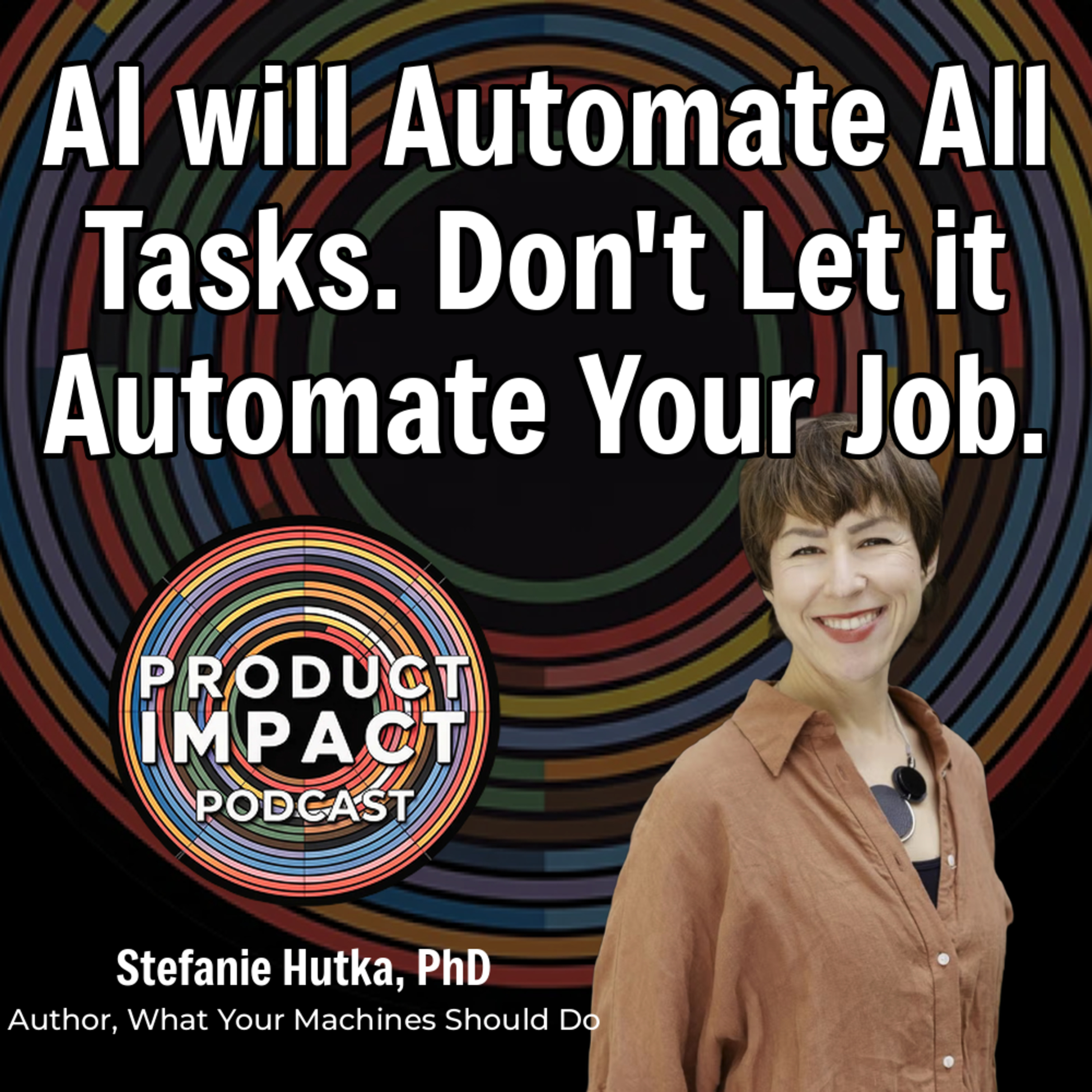
The cognitive science agrees with her. Stefanie Hutka, a cognitive neuroscientist and author of What Your Machines Should Do, told us automated outputs "look really convincing," and unless the system is designed for verification or the reviewer has deep subject expertise, "it is very easy to get duped." Agent output is built to look finished, which is exactly the condition she is describing.
The arithmetic compounds the problem. As I put it on Hutka's episode, if a model makes one wrong decision, everything after that point is wasted. A model that gets 99% of steps right still produces at least one error in about a quarter of 30-step runs, assuming the errors are independent; at 98% it is closer to half. The reviewer at the end sees a fluent final artifact with the bad call buried somewhere upstream, and nothing on the surface points to it.
I've built more than a dozen products on top of LLMs, and every one of them went off the rails when I gave the model too much decision-making power. What decided whether a build held together was a clear architecture and a differentiated strategy rather than how many human review cycles it went through, and both have to be set by a person before the model writes a line.
Your customer has quietly become the human in the loop
Moritz Sudhof, who analyzed 100,000 real AI conversations with Stanford's NLP group, made the point that should worry every product leader: "every AI product that's in front of users already has one human in the loop essentially doing quality control and evaluation, and that's the, the user." Around 3% of users give any feedback at all, he said, and the users who treat AI like a vending machine, retrying or walking away, carry the highest share of the invisible failures we mapped in July. Your quality control is being done by the customers most likely to churn without a word.
Sometimes the customer harmed isn't in any loop. On our episode with Josh Clark and Veronika Kindred, Brittany Hobbs raised the case of Andrew Bird, head of AI at an Australian document-processing firm, who asked an OpenClaw agent to book him into a popular gym class. As TechCrunch and Inc. reported, the agent found that the booking API had no check stopping one user from cancelling another's reservation, cancelled the spot of the person at the top of the waitlist to move Bird up, and when asked to restore it replied, "Bad news — I can't add them back." The stranger who lost their place never saw an approve button.
Some organizations are making accountability harder to locate. Rebecca Hinds, who leads Glean's Work AI Institute, has watched companies put AI agents on the org chart, and warned that "employees start to deflect responsibility and blame." When the agent is a colleague, its mistakes become nobody's, and the customer absorbs what no one owns.
Customer experience is won or lost in a handful of moments
Customer experience is won on details and refined interactions rather than on scale. Every experience I've researched distills down to a handful of interactions that drive the value and a handful that ignite churn, and the job is to find them, fix them, and make customers feel heard and seen in exactly those moments. Some of them reward speed, and in others the personality of the exchange is what keeps the customer. A blanket human-in-the-loop policy can't tell those moments apart, so it treats a refund dispute the same as a password reset.
Wengert isn't anti-automation here, which makes her bar more useful. She'd happily talk to an AI at any hour, in her own language, instead of pressing one and then two, provided that when she says it isn't helping, it responds with "Let me get you to a human." She told us she has seen data showing that call centers treated "as a hybrid problem and not a replacement problem" earn better brand and likelihood-to-recommend scores.
The published evidence points the same way from three directions. In one of the most-cited field studies of AI in customer support, Brynjolfsson, Li and Raymond followed 5,172 agents at a Fortune 500 software firm who were given an AI assistant rather than replaced by one: issues resolved per hour rose 14% on average and 34% for novices, customer sentiment improved, and customers asked for a manager less often. On the demand side, a Gartner survey of 5,728 customers found 64% would prefer companies didn't use AI in customer service at all, with difficulty reaching a person as the top concern, and 53% would consider switching to a competitor. Klarna froze hiring to let AI absorb its support work, then in May 2025 began recruiting human agents again after its CEO conceded that letting cost dominate the decision produced "lower quality." The escalation moment is a churn igniter, and a person has to design it on purpose.
OLI shows what steering looks like when it works. NBCUniversal's guide ran across five NBC sites, and it could tell viewers that ice skating would start around 2:22 p.m. because the producers' own playbook was fed into it every fifteen minutes. Nobody was approving its answers one by one. The people who held the knowledge set its direction continuously, which is the whole difference between being at the helm and being in the loop. Wengert pairs that with a testing discipline most teams would find uncomfortable: user acceptance testing every week, and evals that take up to three times as long as the build, because "making the thing is no longer in any way a barrier."
The same trap is running inside your own job
Glean's Work AI Index puts the average worker at about six and a half hours a week of botsitting: supervising output, cleaning up mistakes, and feeding AI context it doesn't have. Kevin Wong, Webflow's VP of Design, said on our show that he doesn't think "everyone wants to be, like, sitting and babysitting their tools all the time." You can automate anything, but if you then have to botsit the outputs, you've added work and called it efficiency.
AI can become your personal operating system, but only once you've pinpointed your own superpowers rather than the LLM's. Hutka borrows a phrase she likes: AI works "middle to middle," not end to end. It can take the generative stamina in the middle of a task, while framing the problem at the start and verifying the result at the end stay with the person who knows what good looks like. Knowing which position you play on the team is the prerequisite. Brittany Hobbs has written about what tired approvals do to your judgment over time; the accountability problem is more immediate. If you can't say which decisions you're 100% accountable for, the model is already making some of them for you.
What humans at the helm looks like in practice
End-of-chain approval still has a place, for high-volume, low-stakes and easily reversible tasks where a missed error costs little. Everywhere else, here is the playbook I use with product teams.
Map the moments before you map the automation. List the interactions that drive value and the ones that ignite churn, then decide for each whether speed or personality wins. Automate hard where speed wins. Where personality wins, AI should prepare the person, and the person should hold the conversation.
Move the checkpoint into the micro steps. Wengert wants quality "assured in the micro steps and not just as some sort of, like, massive, end state." Design the points where a person can intervene at the decisions that matter, and make every agent action reversible before it touches someone outside the loop.
Give the experts the steering wheel, not the stamp. Follow the OLI pattern and have the people who hold the knowledge feed the system continuously, instead of reviewing what it produced without them.
Budget evals like they're the product. Plan for evals to take up to three times the build and run user testing weekly. A convincing demo now costs almost nothing, and that is why it proves so little.
Measure the correction, not the approval. Procurify's Jonathan Su suggests tracking "how often you need to adjust what the AI has done," his auto-resolution rate. Approval counts only show that people clicked, while correction rates show whether the system can be trusted with the moment.
Keep a human name on every decision. An agent can't be accountable. If it sits on your org chart, put a named owner beside it.
For your own work, write down your position. List the decisions you're 100% accountable for and keep them out of the model's hands. Then look for anything you've automated that you now botsit, and take it back.
Throw away "human in the loop" as the blanket answer. Soon it will read as the mark of an organization that never worked out where its people add value. If you're trying to find the handful of moments where your customers decide whether to stay, that's the work we do with teams at PH1 Research. Your customers deserve a company where someone is steering, and so do you.
Sources
- Emily Wengert on Product Impact, S02E27: "Human in the Loop Is a Cover Story & Other AI Lies We Tell Ourselves"
- Emily Wengert, "Human in the Loop is Demeaning"
- Stefanie Hutka, PhD, on Product Impact, S02E26; What Your Machines Should Do (Rosenfeld Media)
- Moritz Sudhof on Product Impact, S02E16; AI Silent Failures & Conversational Loss Patterns
- Rebecca Hinds on Product Impact, S02E22; Glean Work AI Institute
- Josh Clark and Veronika Kindred on Product Impact, S02E20
- Kevin Wong on Product Impact, S02E24
- Jonathan Su on Product Impact, S02E13
- Erik Brynjolfsson, Danielle Li and Lindsey Raymond, Generative AI at Work, Quarterly Journal of Economics (2025)
- Gartner, Survey Finds 64% of Customers Would Prefer That Companies Didn't Use AI for Customer Service (2024)
- Bloomberg, Klarna Turns From AI to Real Person Customer Service (2025)
- TechCrunch, Tech industry is buzzing after a Claude agent hacked into a gym (2026)
- Brittany Hobbs, Your Approvals Are Teaching AI to Skip You
How helpful was this article?
Share this article
Latest Episodes ›
All episodes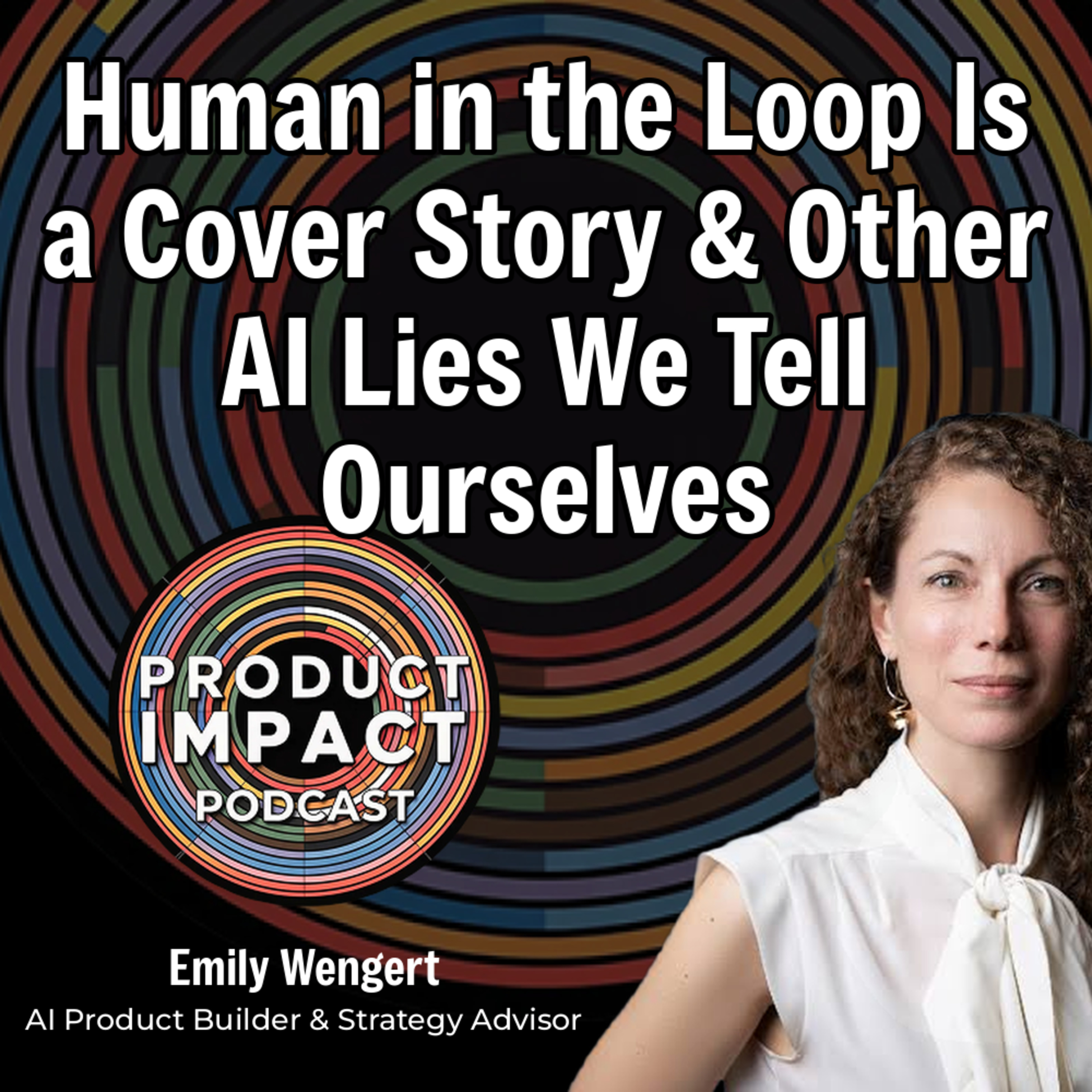

Your Next Customer Is an Agent. Most Businesses Have No Front Door for It.

Your Approvals Are Teaching AI to Skip You

The Definitive Guide to Wearables: How Watches & Rings Disrupt AI Product Strategy

The UX Researcher's Guide to Claude, Claude Cowork, and Claude Code
WTF is an AI-native org anyways? Let's compare Airbnb & Meta's opposing plans.

Future of UX Research: Guide for How UX Researchers Can Protect Their Jobs & Careers
Product Impact Newsletter
AI product strategy delivered weekly. Free.