Google and LLMs Are Destroying Your Website & Traffic
Everyone has been watching ChatGPT citations. The decisive move happened at Google, and it exposed something most organisations would rather not hear about their own websites.
- ● Google made AI Mode the default search experience for over a billion users in May 2026, which matters far more than anything happening inside ChatGPT.
- ● People did not abandon websites because AI is seductive. They abandoned them because when a handful of links compete with an answer, the answer wins.
- ● {"Every citation study agrees on one thing":"fewer websites get cited, and there is no position eight that still gets a trickle."}
- ● AI systems have started citing AI-generated sources, with one audit finding roughly 16% of citations show evidence of being synthetic.
- ● The comfortable story is that platforms stole your traffic. The truer one is that your website was never built to answer a question.
For three years I have been running research on how people actually use LLMs, and on what that does to their relationship with websites. What I'm seeing is terrifying me about what is going to happen to the large businesses, institutions, and especially the publicly-funded orgs that depend on their websites.
None of this is being discussed because the conversation is about AI adoption, not the impact of AI. Sure, some are monitoring web traffic and counting ChatGPT citations. They're arguing about Claude's source list while the decisive move was happening at Google.
On May 19 this year, Google made AI Mode the default search experience for more than a billion people, folding AI Overviews and AI Mode into one surface across desktop and mobile in 200 countries and 98 languages.
The website as we knew it took its death blow there because the biggest ally of websites became their biggest enemy.
LLMs are a superior way of searching for answers
When LLMs first arrived, users modeled their questions and prompts based on what they would type into Google. It made sense, we had no other paradigm, and Google was the homepage of the internet, holding 85.51% of all US search across every device and handling roughly 14 billion searches a day, with 77% of users checking it at least three times daily. Google has consistently been launching capabilities to slow the bleeding of their usage base that was heading to ChatGPT and Claude. They expanded natural language prompting capabilities, integrated Gemini across the Google suite, and then experimented with an AI mode for search results.
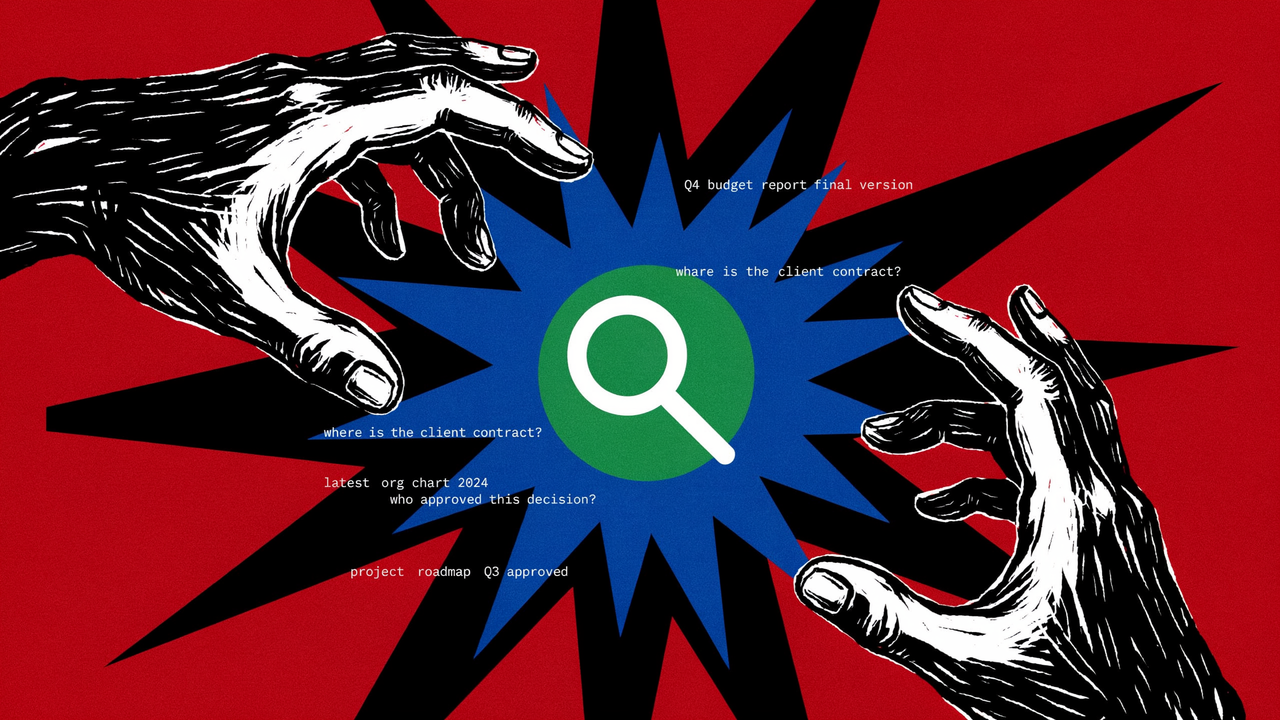
What changed with AI Mode is that the two things are now on the same screen, in direct competition, at the moment of decision. On one side, a handful of links that might contain the answer. On the other, an answer.
In my testing, I've observed countless attempts of users typing in very reasonable search requests and being served irrelevant organic and paid links. Results point them to pages which might provide the answers, while AI mode shows the answer. It doesn't matter how negative these users are about AI. They will read the AI overview when the links don't look like they lead anywhere reliable.
Your website is being disrupted on two fronts
The first front is the one everybody discusses: Traffic is changing because LLMs and AI overviews are gaining a larger share of searches. More people are recognizing the value of using AI to find specific answers. Whereas they might have landed on blog posts about best cameras and best destinations, they can now skip those pages altogether.
The second front gets almost no attention and is moving faster. The people arriving have shorter attention spans and sharply higher expectations about how quickly a problem should be solved. They have been retrained by AI to expect the answer rather than the hunt. A site that would have been considered perfectly good in 2022 now reads as obstruction.
Fixing one front without the other does nothing. A beautifully restructured site still loses to an instant answer if it makes someone work. A fast site with brochure content has nothing worth extracting.
Every citation study agrees on one thing: fewer websites get cited
Some analyses find brutal concentration, with the top 1% of cited domains taking 47% of all citations. Others find the top ten sites accounting for only 12%, no single domain above 5%.
ChatGPT retrieved far more pages than it cited. AirOps study found that 85% of the pages ChatGPT retrieved were never cited.
What this means is that even if your website is contributing to the answers provided by LLMs, you're unlikely to get cited and therefore get no visibility. That AirOps study also found that of pages ranking No. 1 on Google, only 43.2% were cited by ChatGPT.
To add more gasoline on the fire, SparkToro's 2026 study found that 68.01% of Google searches ended without a click. For every 1,000 US Google searches, only 276 clicks now reach the open web, against 374 two years ago. Their founder, Rand Fishkin, coined the term zero-click search to describe this accelerating phenomenon: people getting what they need from Google without ever visiting a website.
ClickUp is the example that should make you check your own numbers. Their blog went from roughly 1.19 million monthly organic visitors to under 29,000 in fifteen months. Google algorithm updates and thin programmatic content did real damage alongside AI, and the figures are third-party estimates rather than ClickUp's own analytics, which is exactly the point: the channel you depend on can lose almost everything inside a year and you will be arguing about attribution while it happens.
Blocking the crawlers does not save you either. Around a third of publishers say they will shut out Google's AI Overviews the moment they are given a control that works, but researchers at Rutgers and Wharton found the ones who blocked crawlers lost roughly 7% of their weekly traffic within six weeks. Get scraped and uncredited, or opt out and lose the traffic anyway.
Your website is becoming irrelevant, if it isn't already, because the traffic you used to be able to forecast is getting consumed by AI summaries, Reddit threads, and AI-generated articles on content networks you have never heard of.
LLM traffic might be higher quality but it's also flipping most business models upside down
The hope every Google executive keeps pointing at is quality: fewer visitors, but better ones. There is real evidence for it: HubSpot measured 11.4% conversion from AI referrals against 5.3% from organic in e-commerce. An AI answer has already run the comparison, filtered the options and handled the objections, so whoever lands on you has been pre-qualified by a machine that read your competitors too.
The claim holds up from the operator side too. Kevin Wong, VP of Design at Webflow, sees this across the millions of businesses that build on the platform, and he told us the same thing on the Product Impact podcast: impressions hold up, engagement after the click is high, and people arrive mid-funnel with far more intent. His reframe is the one worth stealing. The metric that matters stopped being traffic and became conversion and the quality of the person entering the site. AI did not kill your website. It killed the number you had been judging it by.
The old model went like this. Someone searches, lands on your site, and stays on your site until their question is answered. One question, one destination, one session. Everything about how we build websites assumes it.
What actually happens now is that people use different types of sources to answer different types of questions about the same task. A forum for whether real people regret it. An AI assistant to rank the options. A retailer to check the price. A video to see the thing working. Your site for the spec. No single source is expected to carry the whole job, and yours is competing for one slice of it rather than the whole decision.
The best evidence I have seen for this comes from clickstream data rather than anyone's analytics. Eli Goodman, co-founder of Datos, a Semrush company that tracks real browsing behaviour across tens of millions of users, recently mapped a single consumer electronics purchase. Someone buying a Samsung TV first hit it on Reddit, searched for the best OLEDs, asked Perplexity to rank the contenders, stress-tested the shortlist in ChatGPT, spec-checked at Samsung, priced alternatives at Target, went nesting for sideboards at Wayfair, came back to add to cart at Samsung, bought there, then asked Perplexity which wall mount to get.
Samsung wins that journey, and Samsung's own analytics can see roughly two steps of it. Goodman's conclusion is the one that should worry anyone signing off a budget: marketers make cross-channel investment calls on data that only ever describes the part of the journey happening on their own property, so the channels that actually shaped the decision get defunded for never appearing in the numbers used to make the case.
We spend so much time trying to figure out the patterns and construction of a perfect museum, where you're trying to figure out how do you navigate through the right corners and guide people's journey through those experiences.
Kevin Wong, VP of Design, Webflow
The point is that no one has a solution yet. Here's what we can agree on:
- You are expecting people to navigate your internal information architecture, and most of them will not. Across roughly 100 interviews on this subject, I have watched people refuse to engage with site navigation almost entirely. They arrive, scan for the specific thing, and leave if it is not immediately visible. Your org chart rendered as a menu is not a path anyone intends to walk.
- They do not trust your answer, because it is too vague or they have no way to gain confidence in it. Marketing language reads as evasion when someone needs a number. So they bounce to Reddit, YouTube and review sites to find a human who has actually done the thing.
- Most likely of all, your page is being surfaced by AI directly alongside results that look more capable of answering the question. You are no longer being compared to the other nine links. You are being compared to an answer, and to whichever sources that answer considered worth naming.
The human centipede problem of websites
LLMs are exceptional at answering questions and still fundamentally unreliable, and there is a real chance that never gets fixed, because what they drink from is being poisoned faster than they are learning to filter it. Northwestern researchers audited four generative search engines across 712 real-world queries and found roughly 16% of cited sources showed evidence of being AI-generated. One in six citations is a machine quoting a machine. Users are already hitting the consequences, with 42.1% reporting inaccurate or misleading content in AI Overviews.
I watched it happen in a way I cannot unsee. Google cited a summary written by Meta AI, published on a Facebook page, as a source. Synthetic content, laundered through a social platform, resold as primary evidence. Human centipede stuff: the web eating its own waste, re-excreting it, and serving it back as real.
You would expect that to send people running back to the organisations that actually know things. My research says the opposite, and it is the finding that keeps me up. People will take an unreliable source that answers the question over a reliable one that makes them work for it. Your page can be accurate, carefully worded and technically correct and still lose to a confident summary they already suspect is wrong, because yours makes them assemble the answer out of three sections and a PDF. Being right has stopped being enough.
Sites are not the only authority. But brands and companies still need to supply those facts, and they need to supply their perspective, because where else is that gonna come from?
Kevin Wong, VP of Design, Webflow
LLMs are starving for authoritative content, so much so that they will rely on a poor quality website that presents itself as a better answer than your needlessly vague and complex webpage.
Proof that consumer behaviour is changing
Pew ran the study that settles this, because it measures what people did rather than what they say they do. Across nearly 69,000 real Google searches, users clicked a traditional result 8% of the time when an AI summary was present, against 15% when it was not. Putting an answer on the page halves the chance anyone visits a website at all.
The exposure is now near-universal. Pew also found 60% of US adults read AI-generated summaries in their search results, roughly four in ten use a chatbot for information searching, and chatbot use has climbed from 33% of adults in 2024 to 49% this year, with a quarter using one daily.
Knowing the summaries are unreliable has not slowed any of it down, and the reason is the most uncomfortable finding in this piece. Only 18.6% of users always or usually click through to a source. Nearly 90% say verifying AI answers is their own responsibility, while 70% check rarely or never. The search starts in AI, AI decides which references exist, and AI is where people go back to verify, which amounts to asking the same machine to mark its own homework.
So people route around it, the way they always have. Adding "reddit" to a query is now habitual for 32% of US Gen Z weekly and 19% of adults monthly. Side quests to YouTube, review sites and forums are how people hunt for a human who has actually done the thing. Google noticed, and in May started surfacing first-hand accounts from forums and social platforms directly inside AI Mode, absorbing the workaround into the system people were working around.
Expect more of this, not less. As dependence deepens, so does the instinct to check it somewhere a machine has not obviously been, and every one of those detours is a moment your organisation could be the trustworthy human voice instead of a stranger on Reddit.
The truth hurts more than the theft story
There is a comfortable version of all this, and I hear it in every boardroom. Amazon took the product searches, Google keeps the answer, and the aggregators and content networks captured the demand. Your traffic was stolen by companies with more leverage than you will ever have.
Some of that is genuinely true. The harder reading is the one that matters, because it is the only one you control: your traffic is leaving because your website was built for a way of finding information that people have stopped using, and you have not changed it. You have a brochure homepage, navigation that mirrors your org chart instead of anyone's question, a product page that lists features without ever answering whether the thing solves a specific problem, pricing you have to request, and an FAQ written by someone who has never spoken to a customer. All of it was survivable when the alternative was five other links exactly like it. None of it survives when the alternative is an answer.
I am most worried about the organisations with the least room to react. Large institutions, universities, health systems, government services, publicly-funded bodies — the ones with a two-year redesign cycle, a procurement process, and a website that was already three years behind the day it launched. They are the least equipped to move and the most dependent on people finding them.
Google did not destroy your website. Google removed the conditions that were hiding how bad it always was at answering questions.
The organisations that come through this will be the ones that rebuild around the question instead of the brand, publish what they actually know instead of what they want to be known for, and make themselves legible to both the person and the machine reading on that person's behalf. That work was worth doing in 2019. It is now the difference between being a source and being mulch.
What to actually do about it
Rebuild the site around what a visitor is trying to accomplish. Not how your business is organised, not your internal names for product lines, not the order your departments would prefer to be introduced in. Nobody has ever searched for your jargon, and now there is a machine sitting between you and them that translates every question into plain language before you get a chance to answer it.
The division of labour has settled, and it is worth being blunt about which half you lost. Answer engines are better at routing someone to the right page than you will ever be, and that job is gone. What they cannot do is resolve the thing. Your website now has to be superior at two jobs instead: giving the authoritative answer, and putting the tools to act on it in the same place. The calculator, the eligibility checker, the configurator, the real availability, the actual price, the form that starts the process rather than requesting a callback. An answer engine hands you somebody mid-task. If all they find is a description of your company, you have handed them straight back.
Kevin Wong's practical version of this, on the episode, is a loop most teams could start this quarter. Find the questions you fail to show up for, which AI visibility tooling will now tell you, then go and answer them properly, on your own site, in an FAQ, in your headline, and on Reddit where people are already asking. Then stop trying to get one design right for everyone and start getting several versions right, serving whichever one fits the person who arrived. He keeps the core stable, meaning the facts, the brand values and the design system, and lets the delivery flex around them.
If you are trying to work out whether you are a source or mulch, that is the kind of question we take apart with teams at PH1 Research.
How will your business survive the end of the web as we know it?
How helpful was this article?
Share this article
Latest Episodes ›
All episodes


SEO Had 25 Years of Certainty. HubSpot Shipped Their Vision for AEO.
Search is the use case that every business should be focused on solving with AI
Why AI Hasn't Found Its Killer Use Case

The UX Researcher's Guide to Claude, Claude Cowork, and Claude Code
WTF is an AI-native org anyways? Let's compare Airbnb & Meta's opposing plans.

Future of UX Research: Guide for How UX Researchers Can Protect Their Jobs & Careers
Product Impact Newsletter
AI product strategy delivered weekly. Free.