Why AI Capability Is No Longer Defensible — and What Product Teams Should Build Instead
Inference costs fell 78% in 2025. Frontier model development dropped from $100M to $30. When everyone has the same engine, the only question is: what can you defend?

- ● AI inference costs fell 78% through 2025 and frontier model development dropped from $100M to $30 for TinyZero — capability is now table stakes.
- ● 56% of CEOs report no revenue or cost impact from AI (PwC), and 42% of companies abandoned most AI initiatives in 2025 (Deloitte).
- ● The AI startup failure rate reaches 90%, with median lifespan of 18 months — capital is flowing in but defensible value is not flowing out.
- ● Five actions to build defensibility: own the workflow, own the data loop, own the measurement, own the switching cost, own the trust.
Why is AI capability no longer a competitive moat?
Every AI product in 2026 has access to the same foundation models. The same inference providers. The same agent frameworks. The same orchestration libraries. The capability layer — what the product can do — has been commoditized faster than any technology layer in history.
The numbers are stark. Inference costs fell 78% through 2025. The cost to develop a frontier model dropped from $100 million to $5 million for DeepSeek to $30 for TinyZero. Feature cloning that used to take months now takes days. In competitive digital markets, prices trend toward marginal cost — near zero — making it impossible to recover large fixed costs without massive differentiation.
On Episode 2 of the Product Impact Podcast, we examined this through the lens of historical abundance cycles. The pattern repeats with uncomfortable consistency.
What does history tell us about technology abundance?
Every abundance era follows the same arc: infrastructure providers win, raw-material sellers win, users win — and application-layer builders face the sharpest competitive compression.
The fiber optic overbuild (late 1990s). Telecom companies massively overbuilt capacity. Everybody believed in fiber. The infrastructure was real. The demand was premature. The overcapacity wiped out the investors and operators who paid for it. The companies that survived used the cheap infrastructure rather than sold it, going on to build streaming, cloud, and mobile.
The dot-com bust (2000-2002). Internet traffic increased 1,000x between 2002 and 2022. The price of transit fell by 1,000x. AOL — the company selling access to the technology — was destroyed. Amazon — the company using the technology to solve a customer problem — became one of the most valuable companies in history.
The app store era (2008-2012). Apple and Google provided the platform. Millions of apps launched. 99% failed. The survivors were the ones that owned a workflow (Uber), owned data (Waze), or owned a relationship (WhatsApp) — not the ones with the best features.
The AI era is following the same pattern. NVIDIA's data center revenue surged 75%. The hyperscalers are spending nearly $400 billion on capex. But at the application layer, abundance compresses pricing, accelerates feature cloning, and makes differentiation decay faster than you can ship.
How bad is the AI application-layer shakeout?
The data is genuinely alarming for founders:
- PwC's 29th Global CEO Survey: 56% of ~4,400 CEOs saw no revenue or cost impact from AI. Only 12% saw both.
- Forrester: Only 15% of AI decision-makers reported positive profitability impact. Fewer than a third can connect AI spending to business benefits. Forrester predicts 25% of 2026 AI spend will be deferred to 2027.
- Deloitte: 74% of senior leaders said they hope to grow revenue through AI. Only 20% actually are. 42% of companies abandoned most AI initiatives in 2025 — up from 17% in 2024. The average organization scrapped 46% of proof-of-concepts before production.
- Startup failure rates: Private market advisors estimate 85% of AI startups will be out of business within three years. The median lifespan is roughly 18 months. Series A shutdowns jumped from 6% to 14% of all closures — a 2.5x year-over-year increase.
$73.6 billion went into generative AI application startups in the first three quarters of 2025. The capital went in. Defensible value did not come out.
What makes an AI product defensible?
If capability is table stakes, defensibility must come from elsewhere. Five sources of defensibility survive abundance:
1. Own the workflow, not the feature
A feature can be cloned. A workflow — the specific sequence of actions, decisions, and integrations that a user depends on — cannot be easily replicated because it includes organizational context, habits, and institutional knowledge. HubSpot's AEO tool at $50/month defends not through features but through CRM integration — it uses your customer data to identify prompts, a context no competitor can replicate without your data.
2. Own the data feedback loop
Every interaction a user has with your product generates data. If that data improves the product's performance for that specific user or organization, switching becomes expensive because the replacement starts cold. This is why enterprise context infrastructure — knowledge graphs, taxonomies, semantic layers — matters: the context layer is the data loop that models alone cannot provide.
3. Own the measurement
If you define how success is measured, you control the conversation. The Bullseye framework is an example: teams that measure power, speed, impact, and joy have a diagnostic vocabulary competitors don't share. PH1 Research works with product teams to build this measurement layer — because the team that defines what "good" means is the team that retains the customer.
4. Own the switching cost
Make the cost of leaving higher than the cost of staying — not through lock-in, but through accumulated value. Saved configurations, trained preferences, institutional knowledge embedded in the system, historical decision data that the next tool doesn't have. The richer the history, the more expensive the switch.
5. Own the trust
Trust is the hardest moat to build and the hardest to replicate. Robert Brunner told us that "the most valuable currency in technology is rightfully becoming trust." Users who trust your product delegate more, tolerate more, and stay longer. Trust compounds. Feature parity does not.
What should product teams do this quarter?
The question every product leader needs to ask is not "what can I build?" but "what can I defend?" Three immediate actions:
Audit your defensibility. For every major feature, ask: if a competitor shipped this next month using the same model, would our users stay? If the answer is no, the feature is not defensible. Redirect investment toward the five sources above.
Measure impact, not activity. If your dashboard measures prompt volume, tool adoption, and feature usage, you're measuring the wrong thing. Measure outcomes, rework rates, and repeat delegation. The difference between "used the tool" and "got value from the tool" is where defensibility lives.
Build the context layer. Invest in the infrastructure that makes your AI smarter about this specific customer over time. That means data feedback loops, CRM integration, institutional knowledge capture — the boring work that creates the switching cost no amount of feature shipping can replicate.
AI Value Acceleration diagnoses exactly where enterprise AI value creation stalls — the gap between deploying AI and building defensible value from it. The organizations that survive the shakeout will be the ones that invested in defensibility before the shakeout arrived.
Listen: Product Impact Podcast S02E02 — Defensibility > Capability
Related:
- How to Measure AI Product Impact: The Bullseye Framework
- Enterprise Context Is the AI Moat Nobody Built
- Microsoft's Copilot Problem Isn't Adoption. It's Coerced Adoption.
Sources:
- Product Impact Podcast S02E02 — primary source for framework and historical analysis
- PwC 29th Global CEO Survey (Fortune)
- Forrester 2026 Predictions (BusinessWire)
- TinyZero (arXiv)
How helpful was this article?
Share this article
Latest Episodes ›
All episodes
20. AI Shouldn't Be Like Bolting a Spoiler on a Crummy Honda (Sentient Design Authors Josh Clark & Veronika Kindred)

19. Upgrade from Vibe Coding to AI-Native Product Design (Metalab's Myles Palmer)
18. Why are tech workers SO unhappy about AI?
Identify the AI Silent Failures & Conversational Loss Patterns Killing Your Product Adoption

Why AI Hasn't Found Its Killer Use Case
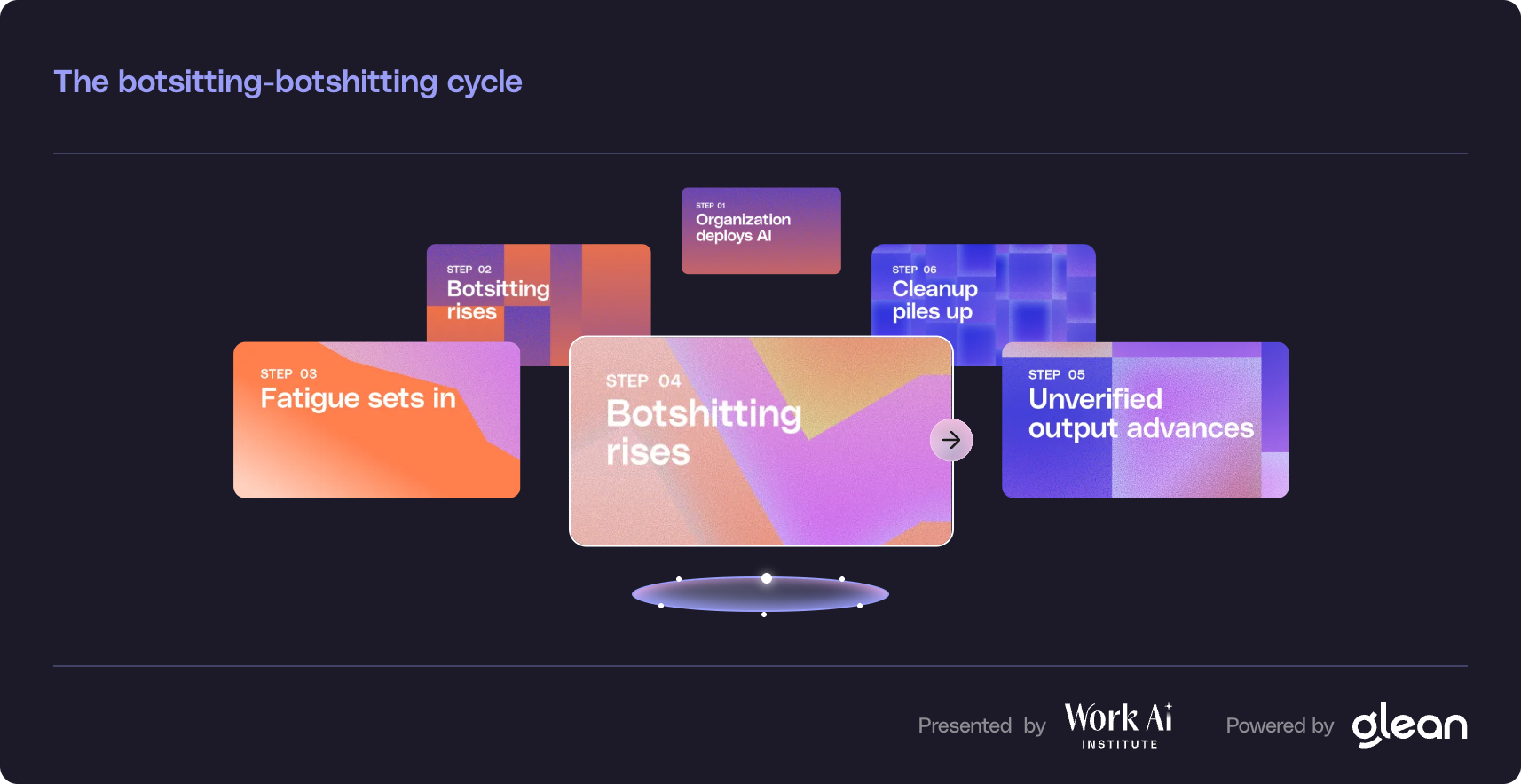
New Report Says You're Wasting More Time Botsitting Than Getting Value from AI

The UX Researcher's Guide to Claude, Claude Cowork, and Claude Code

WTF is an AI-native org anyways? Let's compare Airbnb & Meta's opposing plans.

Future of UX Research: Guide for How UX Researchers Can Protect Their Jobs & Careers
Product Impact Newsletter
AI product strategy delivered weekly. Free.